
There are a number of ways to create a DIY greywater system without spending a dime or hiring a crew to install special grey water plumbing. Some of these suggestions may be technically illegal, but I believe people should be empowered to responsibly utilize their own water, especially in places where drought is an issue. If citizens have access to and are trusted with a number of harmful, explosive and toxic chemicals, oils and gasoline, I think we can be trusted with diverting some grey water to nourish some plants.
Washing Machine Runoff
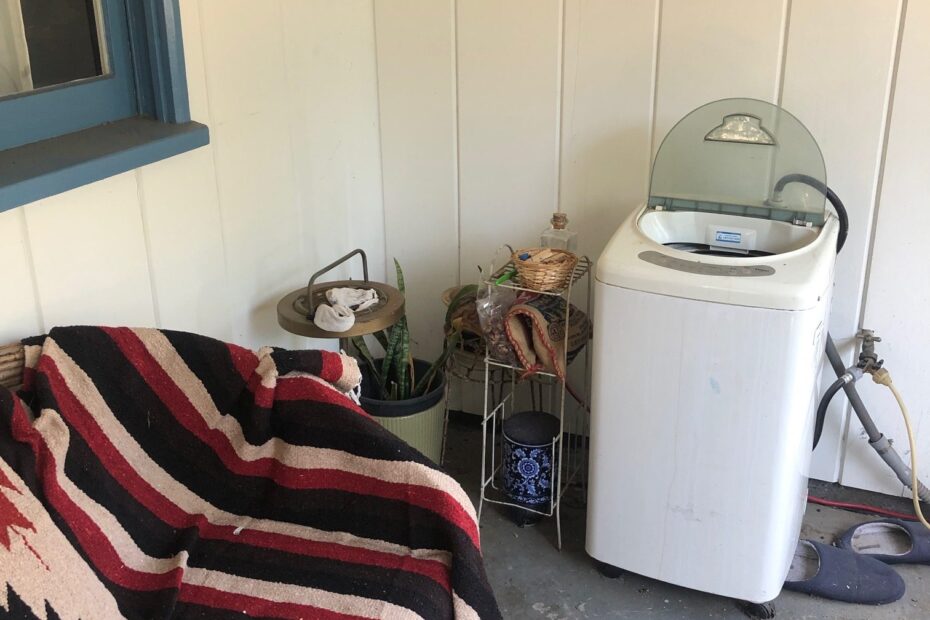
Our mini washer from our apartment days still works, and it even looks cute on the patio, hooked up to our spigot there. Plus, the patio provides easy access to our solar clothes dryer. The laundry line cost only a few dollars, and has held up for more than 2 years. Free of large laundry machines, our laundry room instead functions an office.
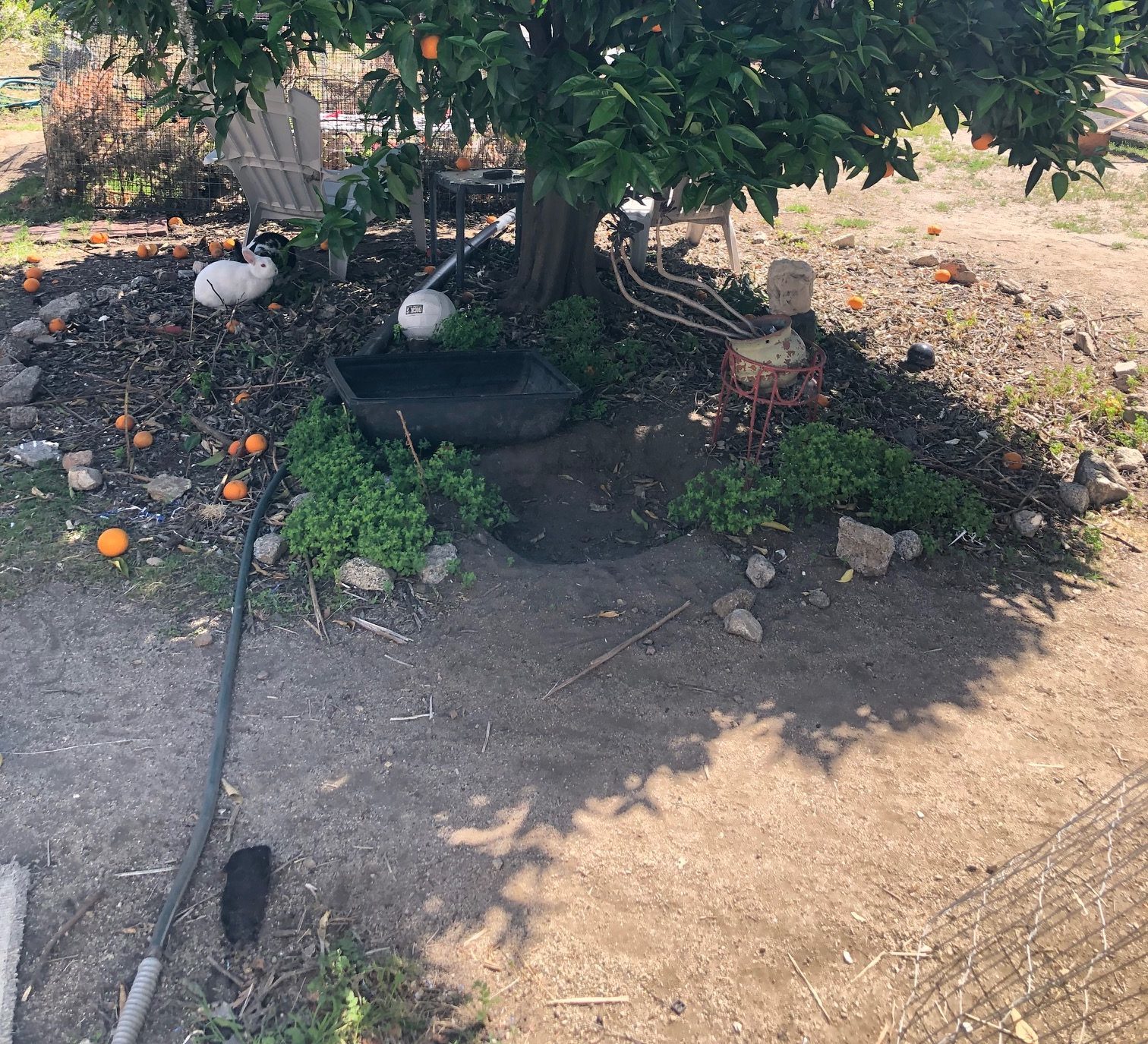
Move the washer to the back patio and hook it up to an out door spigot. Wedge a hose into the grey line that comes out of the machine. Direct it to your trees and garden. Our oranges went from mediocre to praiseworthy!
Eventually, I hope to find an old hose to poke holes in where it passes my garden plants to create a sort of greywater drip system. In the meantime, I dug a hole near the end of the hose to fit my trough. This way, I can I aim the laundry runoff to it and dip my watering can in there to water my garden.
Other greywater sources!
Homes with a crawl spaces can divert greywater lines under tubs and sinks to a hose running to the yard. It is important that the yard slope downward, and to keep an eye out for leaks under the house. Renegade waterers need to be vigilant.
Simple Ways to Capture and Use DIY Greywater
Maybe you rent your home or you don’t have access to a yard. Maybe you want to save every drop like a good environmentalist. You can still capture greywater to water houseplants or even flush your toilet. I keep a tub in my sink to capture water from dish rinsing, vegetable and hand washing. I then carry the tub to the patio to water my outdoor plants. You can also put a bucket in the tub when you shower (but don’t trip!). If you rent, you can water the landscaping this way, sending water back into the ground and therefore into the water table- just make sure things don’t get overwatered. You can also pour the water into a vessel for watering your guerilla plantings on your daily walks. It is important to note that greywater should be utilized within 24 hours.
Operate your Toilet for Free
In the book Extreme Simplicity, by Christopher and Delores Nyerges, they outline turning off the water to the toilet and using shower water to refill the tank. The tops can be cut off of old detergent bottles to create a manageabe water catching vessel with a handle that can live in the shower and easily pour into the back of the toilet. However, any old way your imagination can devise to capture water and pour it into the toilet tank will work.
Detergent and Soap Safety
Although we should not see such a separation between the water that goes down the drain or the recycled water that feeds our own garden, when we put the runoff in our own yards, we awaken our uncertainty about what exactly we’re putting into our soil. This is justified. The lab created polymers in every plastic bottle of shampoo we purchase from corporations seem ok when they’re adding shine to our hair and going into the sewer system, but do we want that Polypropylene Glycol in our garden? No, probably not. I recommend using soap nuts or magnesium pellets as laundry “detergent” and treating stains with Castille soap and sunlight. And always wash cold. This is the greener option, and it doesn’t set stains, giving us multiple oportunities to save our clothes.
I recommend switching out liquid dish washing soaps for the vegan Dish Washing Block by No Tox Life. I do not have a dishwasher, so I have not researched soaps for dishwashers. Feel free to share any garden safe options in the comments!
Today, I use the laundry runoff to water the thirsty orange tree while the rest of the yard thrives with low water California native plants.